
RESTORATION AND FULFILMENT
Read Time: 6 minutes
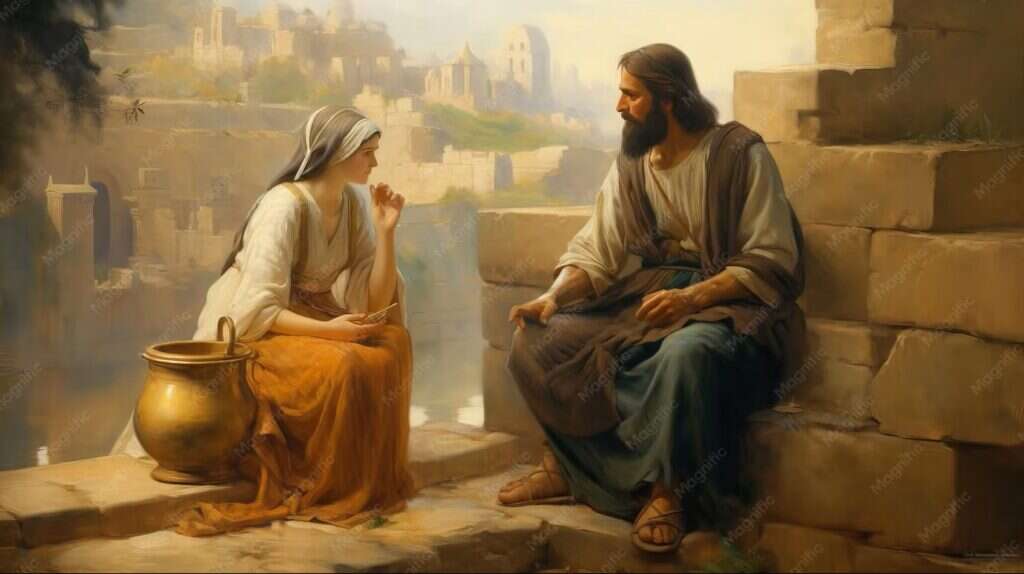
In the gospel of John Chapter 4 we have the story of Jesus and the woman of Samaria. This is not just the story of the woman having a deep and profound and life changing experience with Jesus, but it is also the story of the restoration of the so called lost 10 tribes of Israel, but it is also our own story as well.
We begin in John 4:4, where Jesus had to pass through Samaria*. This was not dictated by geography but by the divine necessity of Jesus to save all of Israel. Jews normally travelled a longer route from Judea to Galilee by skirting along the eastern side of Samaria along the Jordan river. In John 4:6, Jacob’s well was there*. This setting recalls the marital arrangements described in the Pentateuch. As the wives of Isaac, Jacob and Moses were first encountered at a well, so Jesus is the divine bridegroom in search of believers to be His covenant bride.
The Northern Kingdom of Israel is known by the name of its capital city. Samaria, which is conquered by the Assyrians in 722 BC. Assyria forcibly resettles 5 other conquered peoples in Samaria. According to the Jews of the south, these remaining Israelites had defiled themselves by assimilating their pagan practices and intermarrying with them. The enmity between Jews and Samaritans was very much alive in Jesus’s time, and both groups took steps to avoid each other.
Then the woman appears. John 4:9 How is it…?* Jesus turns everything upside down. He wants to share a drink with her. She thinks that it is water from the well. John 4:10 living water*. Jesus is speaking of the life and vitality of the Spirit. Several prophetic texts describe the blessings of the Lord as life-giving water. John 4:15 Sir*. She begins by calling him sir. As the episode progresses the perception of Jesus’ identity becomes ever more clear: by 4:19 he is a prophet*, by 4:29 he is the Christ*, and by 4:42 he is the Saviour of the World*.
John 4:18 five husbands*. The woman has endured multiple marital struggles. Her personal life parallels the historical experience of the Samaritan people. The 5 foreign peoples who intermarried with the northern Israelites introduced 5 male deities into their religion. These idols were individually addressed as Baal, a Hebrew word meaning Lord or Husband. The prophets denounced Israel for serving these gods, calling such worship infidelity to its true covenant spouse, Yahweh. Hope was kept alive, however, that God would show mercy to these Israelites and become their everlasting husband in the bonds of a New Covenant.
This day has now dawned with Jesus, the divine bridegroom who has come to save not only the woman but all of the Samaritans from a lifetime of struggle with 5 pagan husbands.
John 4:26 I… am he*. Jesus accepts the title Messiah only here and at his trial. John 4:28 left her water jar*. The woman becomes both a believer and a missionary, accepting Jesus as the Messiah and sharing that belief with her town. The water jar represents our worldly desires, drawn from the dark wells of the world that can never really satisfy. Conversion to Christ moves us, like the Samaritan woman, to renounce worldly pleasures and leave behind of the old way of life and to follow a new way of life.
John 4:34 My Food*. The Father’s will is always the driving force behind Jesus’ mission. John 4:35 white for the harvest*. Suggests that not only the Samaritans but the whole world is ripe and ready to be gathered into the missionary efforts of the Church.
John 4:42 the Saviour*. The woman who began her day like all the other ones, would encounter not condemnation but would encounter Love itself. At first, she symbolizes the unfaithful bride that were the Samaritans and as she is gradually healed and reconciled by Jesus, she is made new again. This life changing encounter put her into missionary-mode. Risking everything to share with her community, as she was ostracized from the village, to bring the Good News that they were now restored to friendship with God. Jesus is the fulfilment of all her desires and ultimately the fulfilment of the desires of the whole world.
*Commentaries from Ignatius Catholic Study Bible and the Great Adventure Bible.
• I suggest that you open your bible to John 4 and reread Jesus and the Woman of Samaria as you read and meditate on this reflection.